
Tennis star Chris Evert was mid-match at the 1978 U.S. Open when her diamond bracelet broke and fell onto the court. She stopped play and refused to continue until it was found. That moment gave this elegant piece of jewelry its iconic name.
These bracelets remain timeless accessories today. Celebrities and style enthusiasts wear them. Therefore, choosing the right one requires understanding factors like diamond quality and budget. You might be thinking about a high-end piece starting at $10,000 or learning about options under 1CTW. We'll walk you through everything you need to make a confident purchase.
What Is a Tennis Bracelet and Why It's Called That
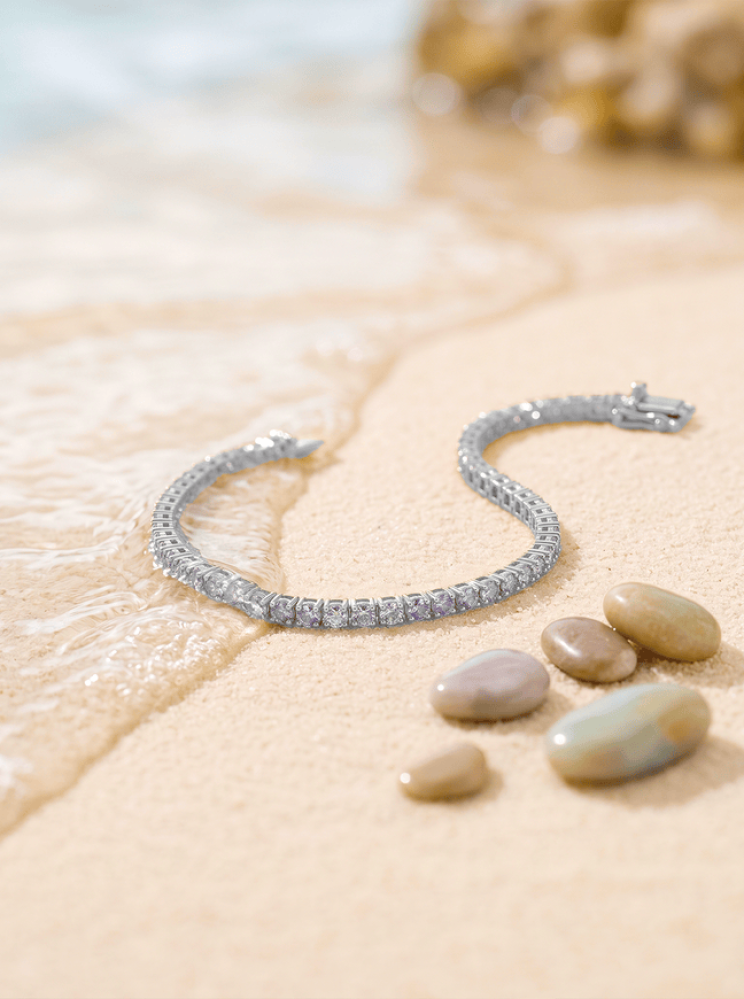
A tennis bracelet features a continuous line of Silver and Moissanite in a single, symmetrical row. Each stone matches in color, size, cut, and clarity. This creates an uninterrupted flow of sparkle around the wrist. The flexible design allows natural movement and is crafted in gold or platinum with a secure clasp.
This style existed long before tennis had anything to do with it. Jewelers called these pieces "line bracelets" or "eternity bracelets" during the Art Deco era of the 1920s. The symmetrical design and geometric elegance defined that period's aesthetic.
The transformation happened because Chris Evert's bracelet broke during her match at the time the clasp failed. The bracelet was designed by noted jewelry designer George Bedewi. Officials stopped play while she searched for it. Evert referred to the missing piece as her "tennis bracelet" in an interview. That single phrase stuck, and jewelers adopted the new name right away.
Sales exploded after the televised incident brought the design into national spotlight. The bracelet evolved from an evening-wear accessory to something worn casually during athletic activities. Diamonds remain the classic choice, but variations now include colored stones such as sapphires and emeralds.
How to Choose Your Perfect Tennis Bracelet
Selecting the right tennis bracelet involves assessing diamond quality and construction details. The 4Cs determine brilliance and value. Cut is most decisive when it comes to sparkle, with round brilliant cuts maximizing light return. Color grades D to H deliver bright appearance without unnecessary cost. Clarity matters less than you'd expect; VS2 and SI1 grades often look flawless since smaller diamonds hide inclusions better. Carat weight refers to total carat weight (TCW), meaning all diamonds combined.
Metal selection affects durability and esthetic. White gold suits 50% of tennis bracelets but requires rhodium replating every 12 to 24 months. Platinum offers superior durability at 95% purity and costs more due to its density, which is 60% greater than gold. Yellow gold provides warmth, while rose gold adds a romantic tone with boosted durability from copper content.
Settings balance sparkle against security. The 4-prong setting remains most popular and provides exposure and security without bulk. Channel settings create sleek lines with snag resistance, while bezel settings surround stones and offer maximum protection.
Lab-grown diamonds cost 30% to 60% less than natural stones while remaining chemically similar. Natural diamonds retain value better, but lab-grown options allow higher carat weight within budget.
Smart Buying Decisions for Tennis Bracelets
Pricing varies from 374.59 for fashion pieces to over 936,480.11 for luxury designs. Most purchases fall between 3,745.92 and 74,918.41 depending on specifications. Total carat weight drives cost faster than individual factors.
Lab-grown diamonds cost roughly 5-10% of comparable natural stones at equivalent quality. That gap allows higher carat weight, better color grades (D-F) and superior clarity (VS-VVS) within the same budget. Dense pavé settings became standard entry-level work for lab-grown pieces, whereas achieving similar density with natural stones pushes prices much higher.
Documentation matters more than most buyers expect. GIA reports provide independent verification of diamond characteristics and increase resale value. So ask sellers for exact total carat weight, color and clarity ranges, and written confirmation of whether diamonds are natural or lab-grown. Verify that clasps include safety latches and confirm what metal karat is used.
Treat warranty terms as part of the working price. Favor sellers offering clear upgrade credits and documented repairs for at least one year. Budget for periodic cleaning and prong maintenance before you purchase, since higher-quality pieces require less frequent repairs.
Right now, you have all the knowledge needed to select a tennis bracelet that matches your style and budget. Understanding the 4Cs and choosing between natural and lab-grown diamonds will guide your decision.
The perfect tennis bracelet balances quality, security and personal preference. Take your time comparing options and verify documentation. Don't skip warranty details. Your ideal piece is out there waiting, and with this knowledge, you'll find it without second-guessing your choice.